Biggest animals in the world

Humans may exist the ones who cracked the lawmaking on cell phones, written language, and sliced bread, just the animal kingdom brings a lot to the tabular array in terms of sheer size and forcefulness. Yes, it was a human being existence who wrote "Romeo and Juliet," as was the inventor of the vacuum cleaner, but these accomplishments don't mean much to a 12-foot-wide crab or a 300-pound bird. As humans, we tin can only bow our heads in respect to these massive kings and queens of the animate being earth.

The animals included on this listing all share one trait: They are larger than whatever other animal of their kind, which may have a little something to do with an evolutionary trend. In recent years, new research has emerged in support of Cope's rule, which posits that over generations, animals will evolve to become larger. This Stanford written report found that while it's non necessarily the case that all animals have become bigger over time, those that were already on the larger side did evolve and branch off to become more diverse—which tin ultimately bear witness benign in terms of survival.

That existence said, there are certainly some ancient creatures whose unfathomable size would accept made them an unwelcome invitee in the modernistic world. Take the extinct Titanoboa, for instance: a 3,000-pound, 48-foot-long snake whose remains were discovered in Republic of colombia.

Stacker has done extensive research to create this unique listing, which features the largest animals of their kind for certain categories of the animal kingdom. These categories, including mammal, bird, fish, and beyond, offering an overall look at the living beings that tower over others of their kind.

Read on to larn more about the biggest animals in the world.

You may also similar: Deadliest animals in the globe

1 / 17

Andrew Sutton // Shutterstock

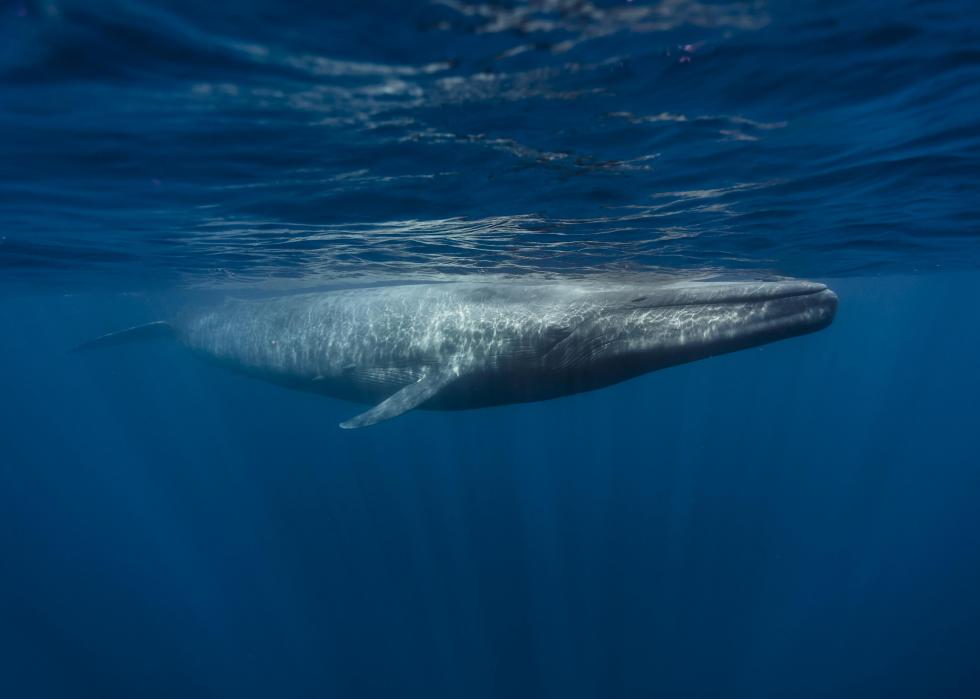
Mammal: Blue whale

The blue whale is the largest animal on Earth, and perhaps the largest ever to have existed, usually ranging between 70 and xc anxiety in length (though there are records of some that have exceeded the 100-human foot marking). These whales accept been institute in every bounding main across the globe, often traveling in pairs; areas off the California coast concord the densest population. Unsurprisingly, being that big requires many calories: Blue whales tin can eat between ii and 4 tons of krill (a shrimp-like crustacean) a day.

two / 17

Gorgo // Wikimedia Commons

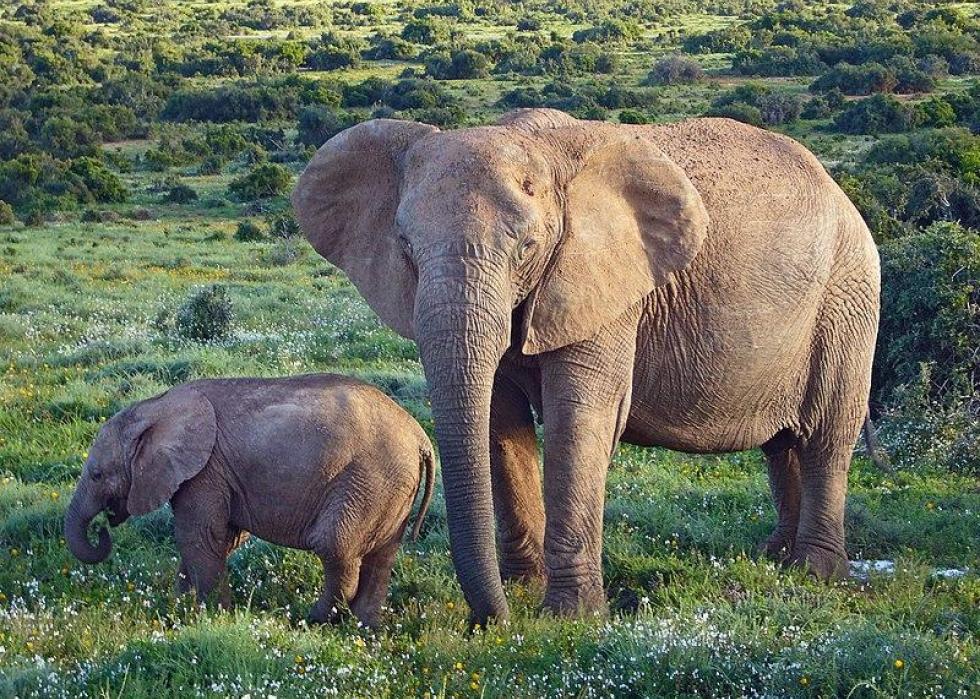
Land mammal: African bush elephant

The African bush-league elephant, which can weigh up to xi tons and reach 13 anxiety in height, is characterized by its pronounced tusks, and large head and ears. The elephant is also notable for its dextrous and sensitive torso, which is made upwardly of over 40,000 muscles and tendons and thereby allows the elephant to handle objects of all sizes with ease. African bush elephants tin can be found in most African countries, though their survival is at stake due to both poaching concerns and habitat devastation.

3 / 17

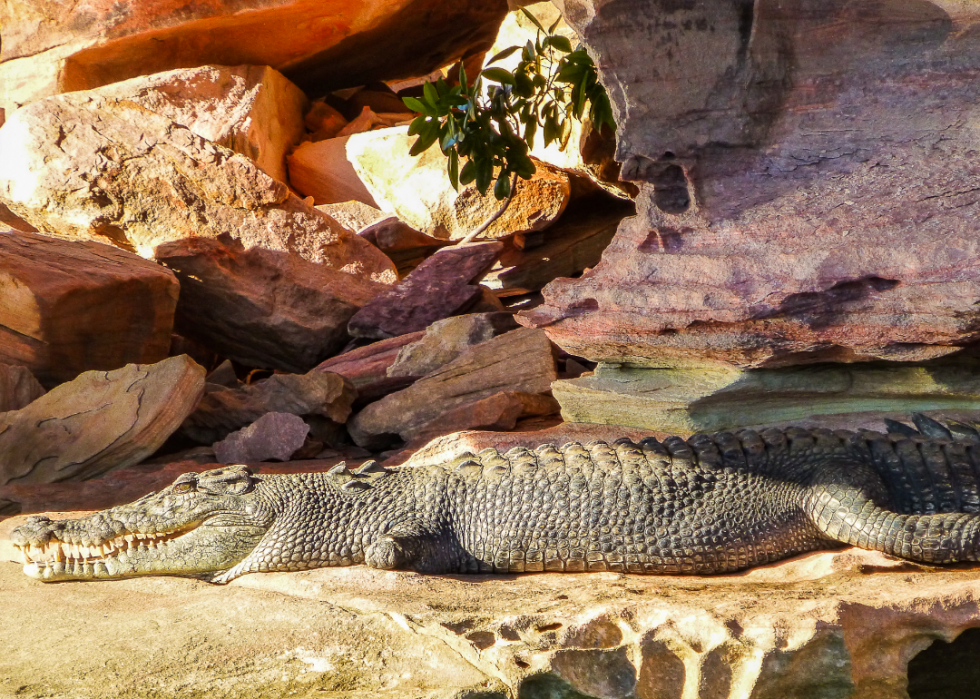
Reptile: Saltwater crocodile

Despite earning the cute-sounding nickname of "saltie," the saltwater crocodile is often regarded as a fearsome creature—due to its ane,000-pound weight, massive jaws, and willingness to eat nigh whatsoever animal that wanders into its sights. These crocodiles chase by waiting just beneath the surface of a body of h2o, then bursting out using their tails in social club to grab and drown their casualty. Saltwater crocodiles tin exist establish in a variety of regions, ranging from Australia to Southeast Asia.

4 / 17

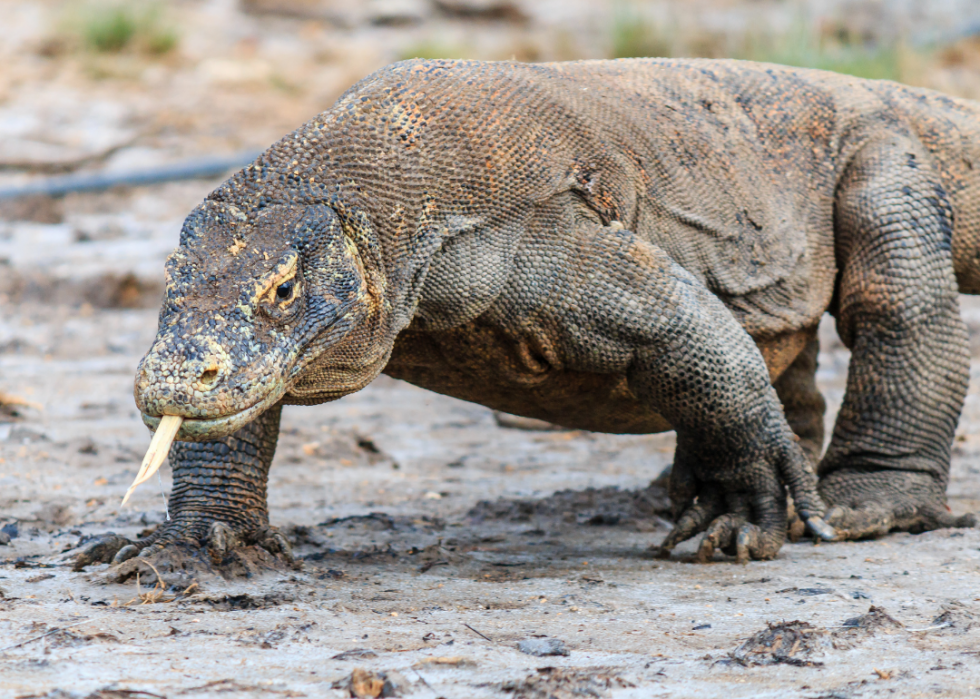
Lizard: Komodo dragon

The Komodo dragon'southward proper name alone is an indicator of this lizard's power and physical characteristics: It'southward dark and scaly, extremely strong, and uses a long, thin forked tongue to test the air for signs of nearby prey. At maturity, a Komodo dragon weighs 154 pounds on average, though the largest confirmed specimen was more than twice that size. Found in Indonesian Islands, the Komodo dragon can both eat 80% of its own body weight in one meal, and empty its stomach at volition in social club to reduce its weight and escape danger more rapidly.

5 / 17

Patrick G. Campbell // Shutterstock

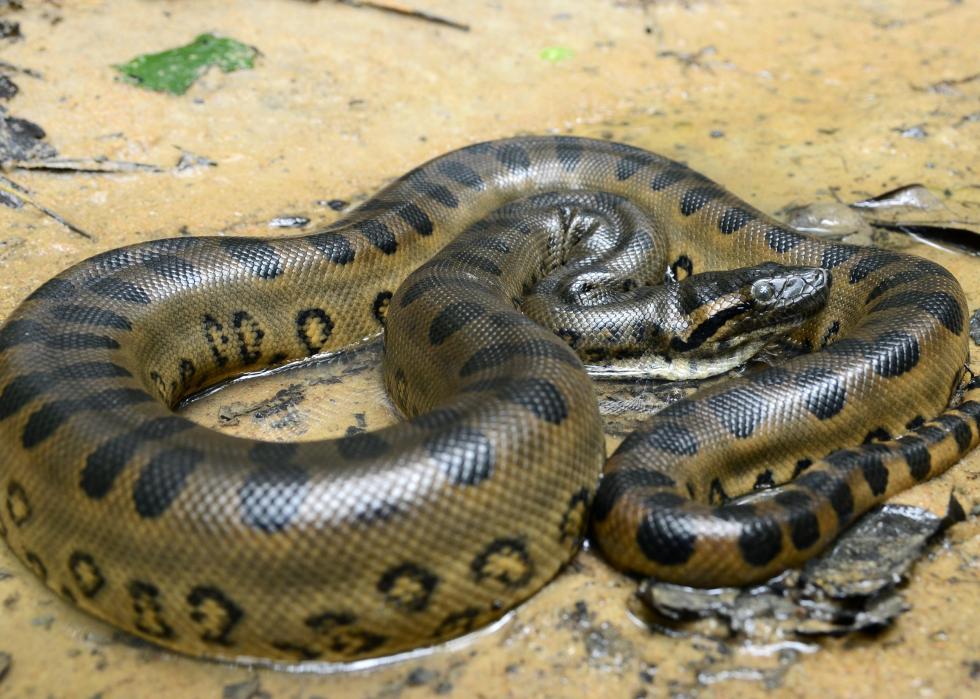
Ophidian: Giant anaconda

Referenced in popular civilization from hip-hop songs to activity movies, this jungle-dwelling snake can weigh in at effectually 550 pounds. Found in swampy regions of Southward America, and commonly known as the green anaconda, this creature not only possesses the power to swim, only is in fact more agile in the water than on country. The mega-serpent kills its prey with asphyxiation, and is known to maintain its size past dining on large animals such as pigs and deer.

6 / 17

paula french // Shutterstock

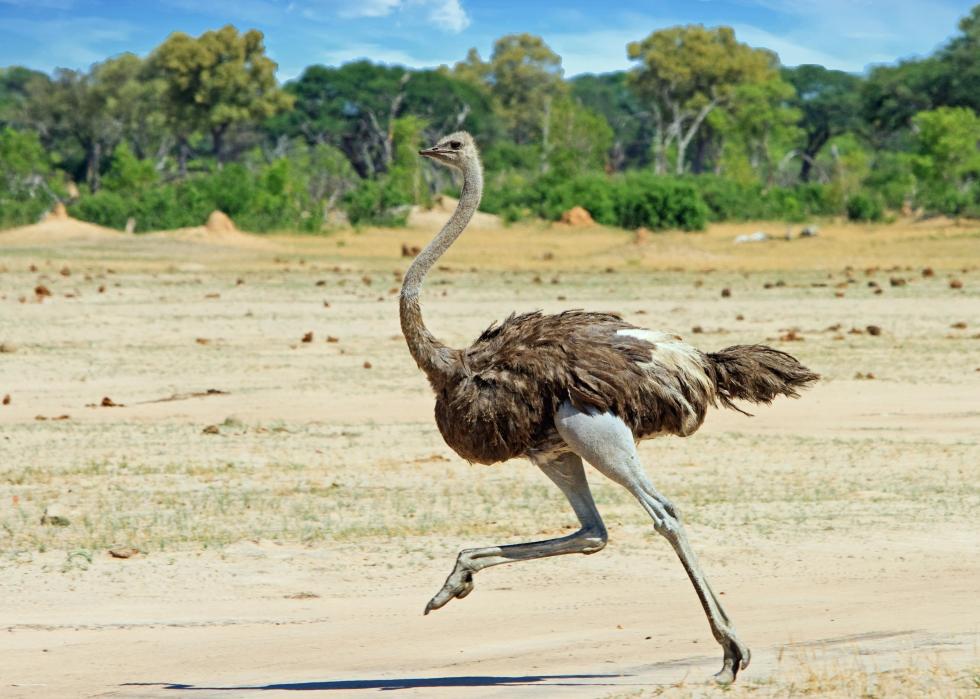
Bird: Ostrich

The ostrich may non actually be able to fly, only this African bird can run at speeds of 45 miles per 60 minutes when threatened. An adult male ostrich may weigh shut to 300 pounds, and can accomplish a tiptop of 9 feet (about half of which comes from its neck). This terminal surviving fellow member of the genus Struthio dines on things like berries and grass, and has a progressive approach to the partition of household labor: Both females and males take turns guarding and tending to their eggs afterward a female person has laid them.

7 / 17

tristan tan // Shutterstock

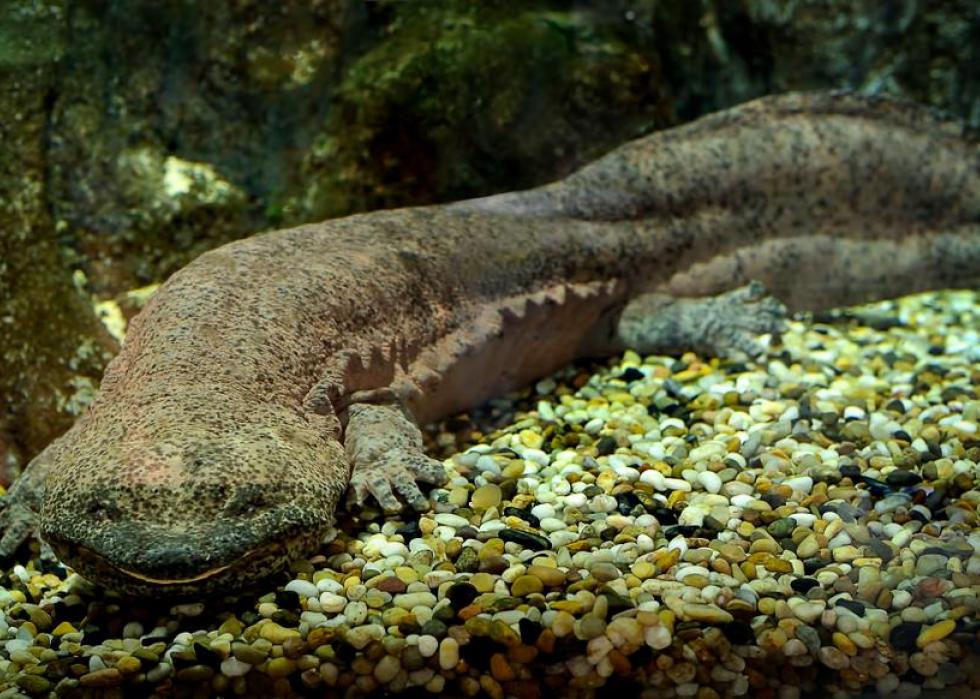
Amphibian: Chinese giant salamander

Chinese giant salamanders are certainly non new on the cake—they vest to the family Cryptobranchidae, ancestors of which dissever off from all other types of amphibians during the Jurassic period. This amphibian, whose wide mouth sometimes resembles a grinning, tin can grow to be near half dozen anxiety long, with its tail making upward more than half of this overall length. The species has long been revered in China, but is currently under threat of extinction due primarily to over-harvesting and lack of habitat protection.

8 / 17

Ministry of Fisheries // Getty Images

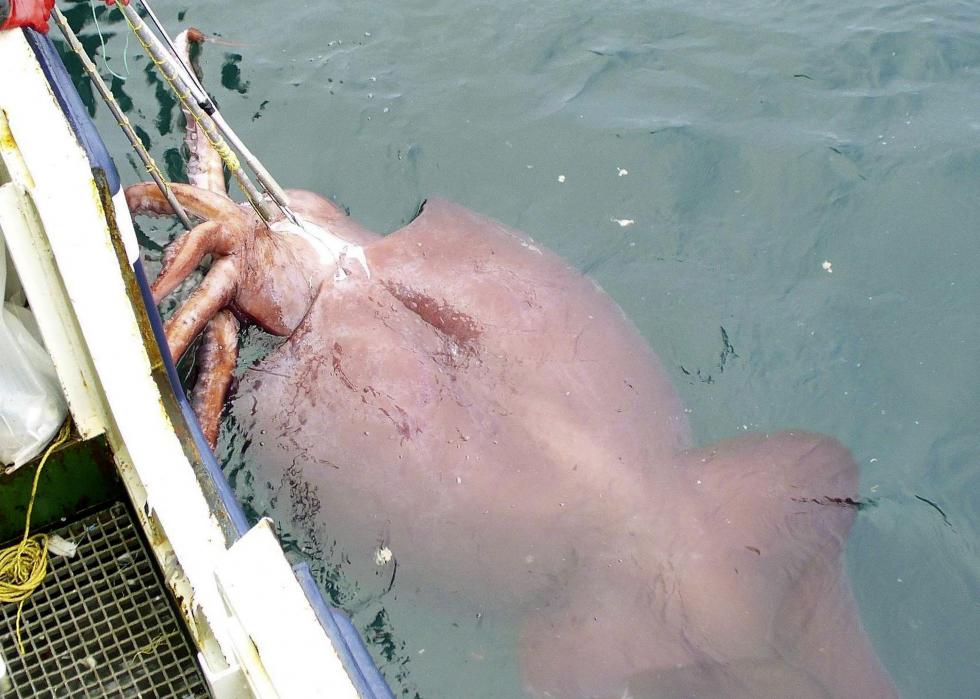
Invertebrates: Colossal squid

Colossal squids aren't just massive, measuring up to 45 feet or and then in length in adulthood—they are also incredibly mysterious, living at extreme h2o depths that make gathering scientific data on them quite difficult. There have only been a few human sightings of this cephalopod in all of history: It was first identified in 1925 due to remains discovered inside a whale'southward tummy; since so, information technology has only been spotted in its entirety a handful of times. One notable feature of this elusive invertebrate is its extremely large eyes—which tin can exist the size of basketballs.

9 / 17

Viktor Hejna // Shutterstock

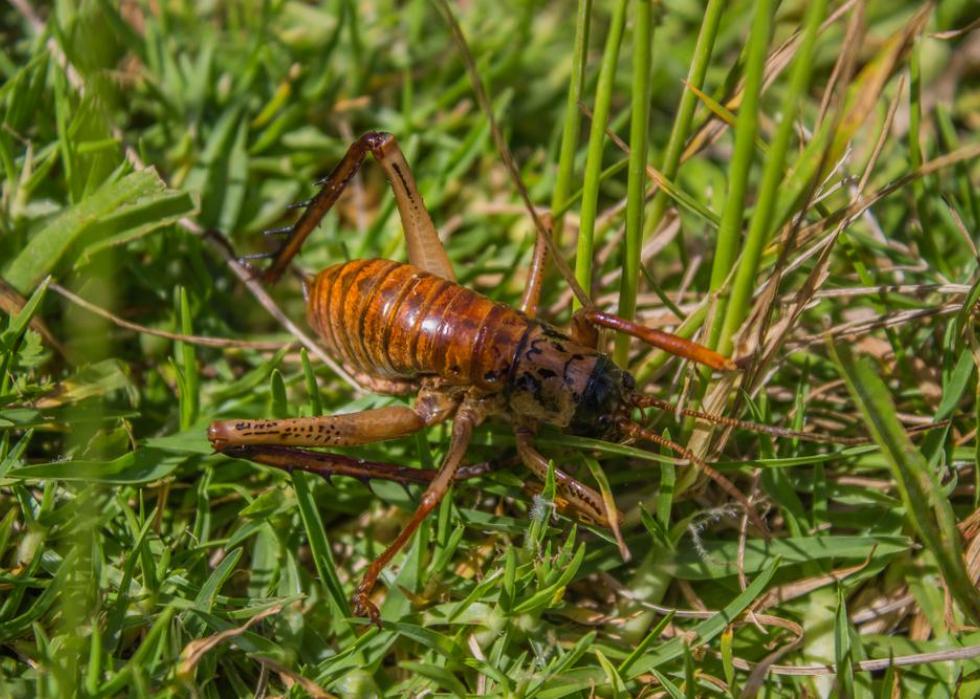
Insect: Giant weta

This fist-sized issues has a long history: It was able to survive due to the fact that when New Zealand separated from other landmasses millions of years ago, information technology was left without predatory mammals. Today, the giant weta (of which there are 11 species) is the heaviest insect in existence, and more often than not lives in copse. The word "weta" is derived from a phrase meaning "god of ugly things" in indigenous New Zealand language Maori, which is not inaccurate when talking about this long-horned, spiny-legged creature.

x / 17

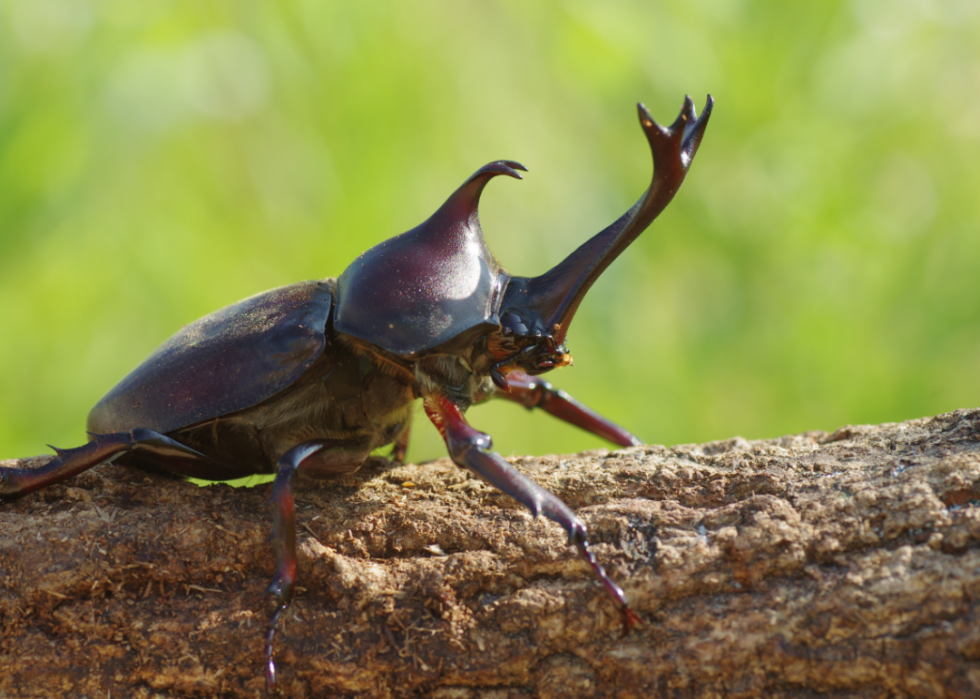
Protrude: Rhinoceros protrude

The Rhinoceros beetle has rightfully earned its common nickname "Hercules beetle," because that some adults of the species can lift objects upward to 850 times their own weight. These blackness, greyness, or green beetles are found on every continent except Antarctica and tin accomplish a length of most half dozen inches. When threatened, information technology tin can produce a sharp hissing sound that comes from the protrude rubbing its abdomen against its wings.

11 / 17

Spider: Goliath bird-eating tarantula

The Goliath bird-eating tarantula'south viii eyes might give the impression that information technology has excellent sight, simply most of this spider's ability to "see" comes from using the hair on its body to sense nearby vibrations. As the biggest tarantula in the globe, it boasts a body span of nearly 5 inches and a leg bridge of 11 inches. They are near e'er solitary, pairing upward only when necessary to mate.

12 / 17

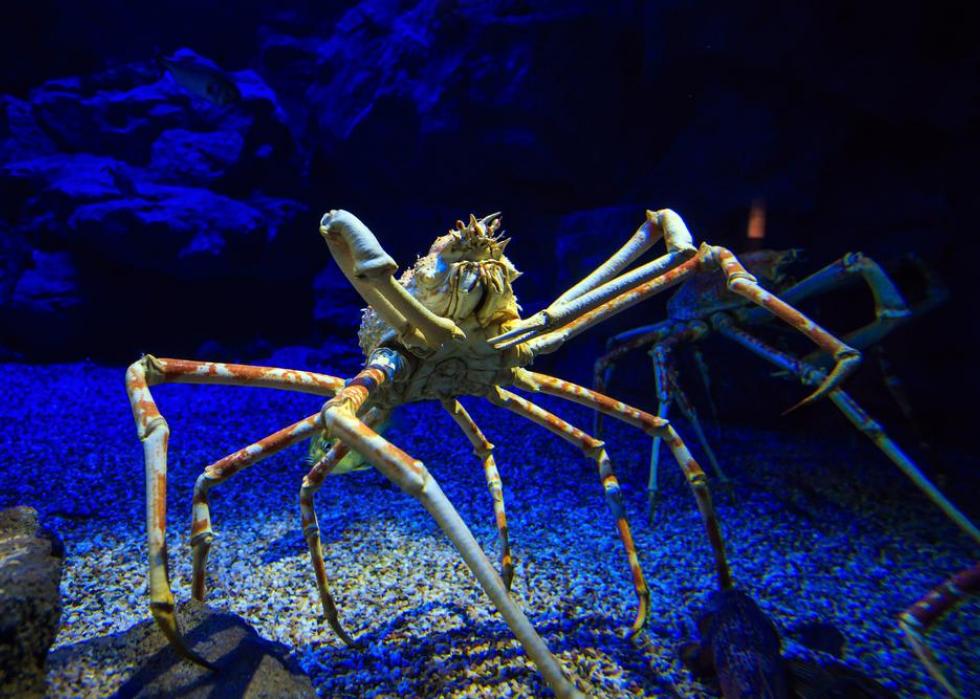
Marine arthropod: Japanese spider crab

It only takes one look at the Japanese spider crab to understand where its name comes from: This marine arthropod bears long, spindly legs that can reach an overall bridge of 12 or 13 feet. Sporting an orangish torso and white-spotted legs, it lives in the Pacific Ocean near Japan, primarily in waters between 500 and 1,000 feet in depth. Information technology is idea to take a life expectancy of nigh 100 years.

13 / 17

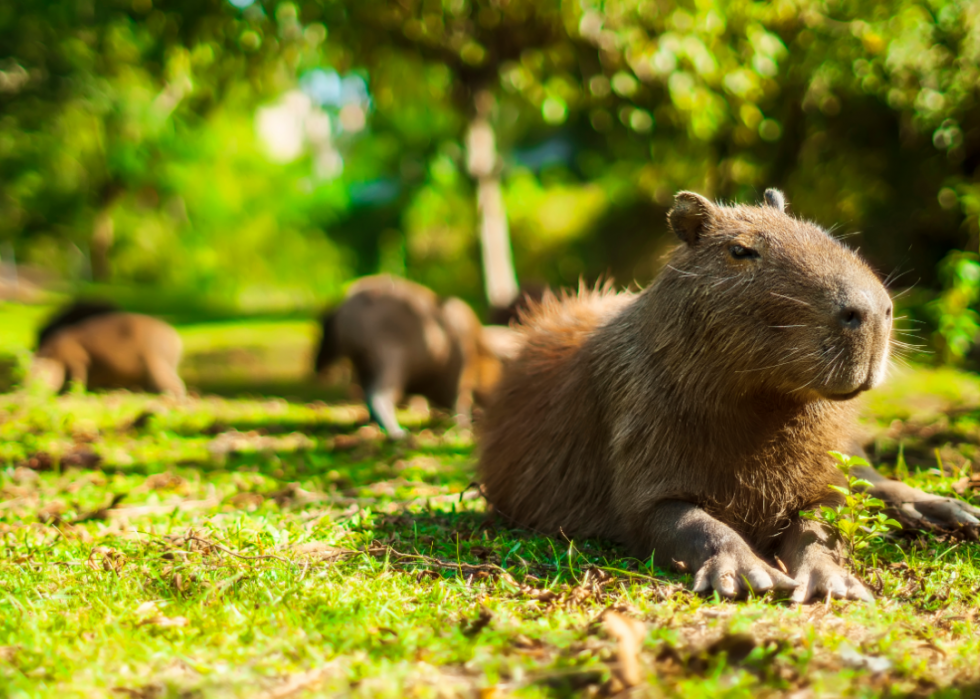
Rodent: Capybara

Rodent haters, expect abroad: The capybara is the largest rodent in the world, continuing about 2 feet tall at maturity. Sometimes referred to as "capys," they are native to South America; they tend to live on riverbanks so that they tin can feast on h2o plants and combat their naturally dry skin with daily swims. These hefty rodents carry shaggy brown hair and webbed feet, and are notoriously content to serve as some other beast's chaise lounge.

xiv / 17

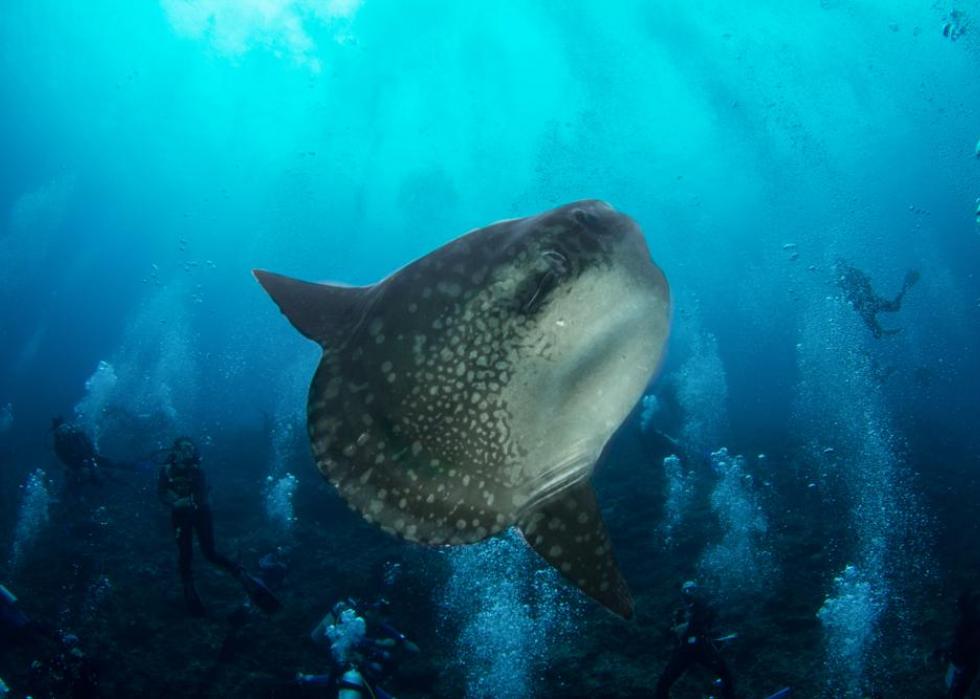
Bony fish: Sunfish

The sunfish (also known every bit the mola, Latin for "millstone") tin grow to weigh a whopping 2.5 tons and bridge ten feet horizontally. Their large dorsal fin might scare swimmers at offset, as information technology looks quite like to that of a shark, but in fact the sunfish is harmless to (and unafraid of) humans. Silver and rough skinned, these aquatic creatures can exist found in tropical oceans beyond the globe—often soaking up sunlight near the h2o'due south surface.

15 / 17

Krzysztof Odziomek // Shutterstock

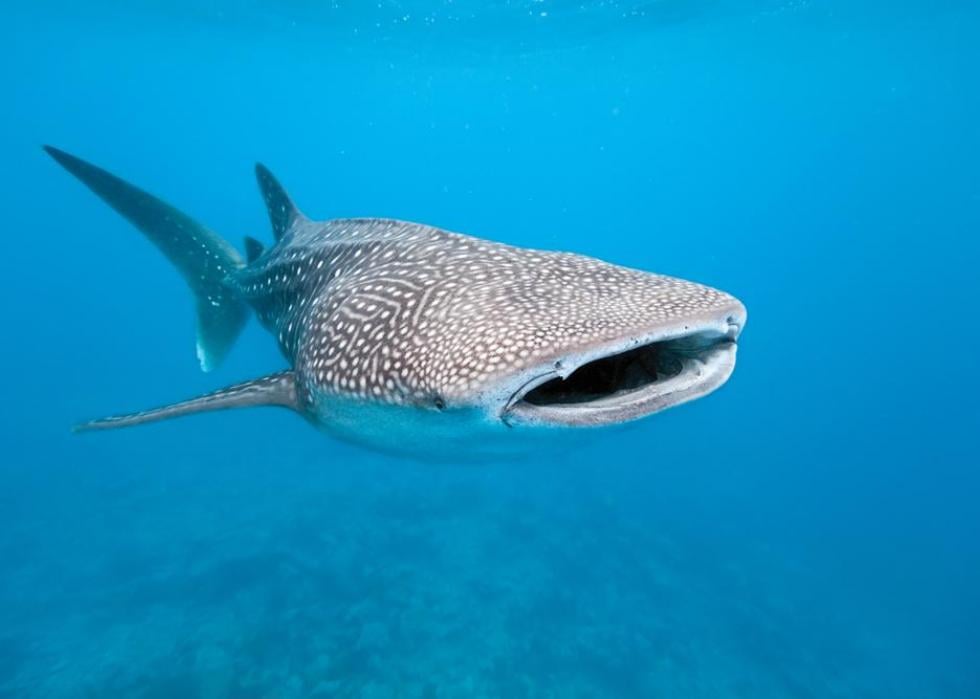
Fish: Whale shark

The whale shark may be the largest shark in the world (it can reach the size of a school passenger vehicle), but information technology hands falls into the category of "gentle giant." Whale sharks are filter feeders: Rather than seeking out and attacking other ocean creatures for sustenance, they simply swim along with their large mouths hanging open, sucking up all the plankton they pass. They can exist found in many tropical oceans and are distinguishable from other kinds of sharks due to their uniquely white-spotted bodies.

xvi / 17

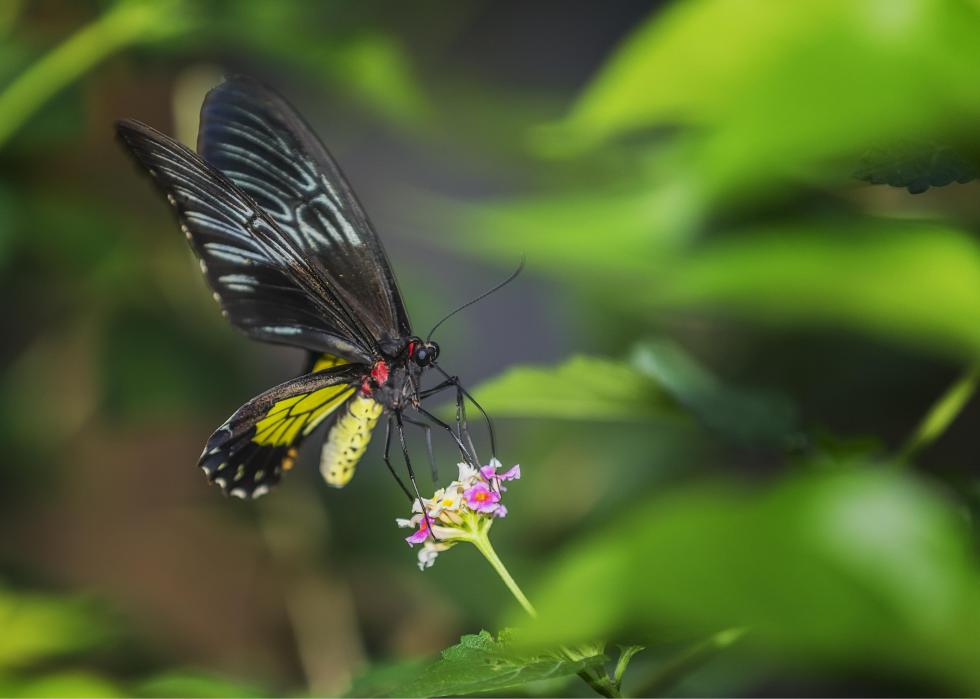
Butterfly: Queen Alexandra'southward birdwing

With a wingspan of most 10 inches, Queen Alexandra'southward birdwing—which is institute only in New Guinea—is the largest butterfly in existence. That's not the but place where this butterfly beats out others of its kind: It takes iv months for it to get a full adult, and then it lives for three months beyond that (many other collywobbles merely live for about one month at most). While the females are mostly brownish, the males of this species typically brandish neon green and aquamarine wings.

17 / 17

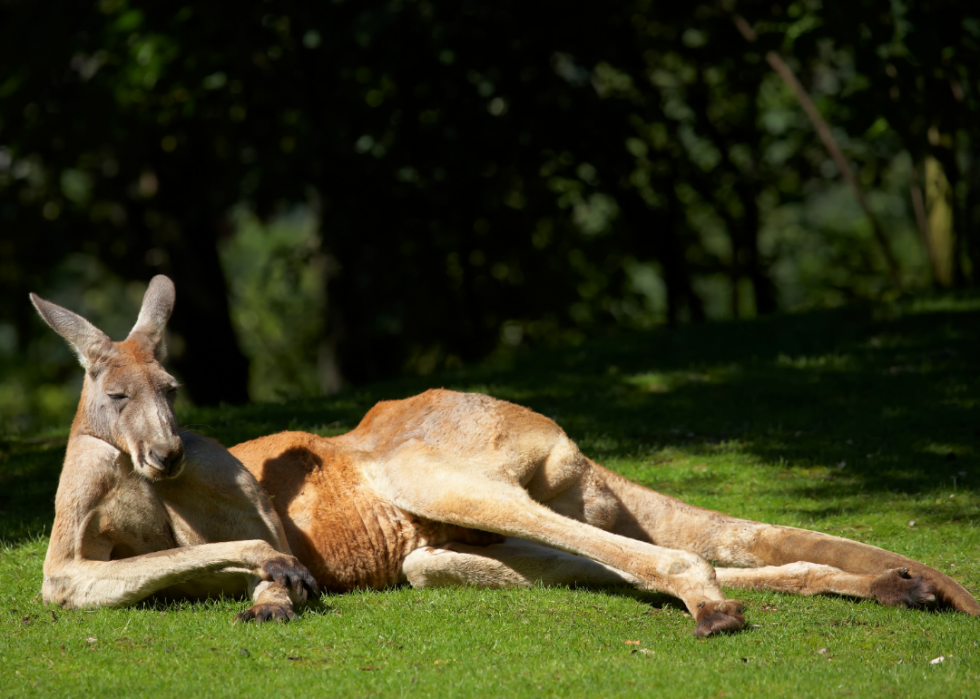
Marsupial: Ruby kangaroo

The small groups into which cherry kangaroos often besiege are referred to as "mobs," although they haven't been known thus far to participate in organized crime. They can weigh about 200 pounds and have a lifespan of upwards to 23 years; their powerful legs give them the ability to move at a speed of 35 miles per hr and jump six feet high. In spite of its large adult size, the red kangaroo is smaller than a red at birth and spends an additional two months inside its mother's pouch before branching out into Australia's deserts and grasslands.

You lot may likewise be interested in: 1 million species are facing annihilation—within Earth'southward sixth mass extinction event

Trending Now