

Do Animals Deserve The Same Rights As Humans
There are many awkward conversations you might have at family or piece of work meetings as the singular vegan. It'southward possible to find yourself carefully describing your food choices, aware that you are on the edge of disassembling a joyous bulgogi dish into the painful experiences that were required to produce information technology. Talking about issues related to animal rights can be emotionally difficult peculiarly when eating with and cooking for others is a dearest language; rejecting family and friends' cooking can be hurtful.
Yet animate being advocates have managed to tap into common, shared values, successfully encouraging more and more people to reexamine what living their values really looks like, specially values of respect, empathy, imagination, cooperation, adaptability, and pity for all living beings.
Do Animals Have Rights?
In the United States, many animals are defined as belongings and practice non take rights in the same sense that humans take rights. At least 13 nations accept symbolically acknowledged the dignity and personhood of nonhuman animals or the need to bear witness compassion towards them as something other than objects in their constitutions. (These are Brazil, Germany, India, Switzerland, Bulgaria, Cambodia, Egypt, the Iroquois Nations, Nepal, Papua New Guinea, the People'south Republic of China, the Slovak Republic, and Slovenia.) Yet such acknowledgments remain largely lip service—the animals in these thirteen nations are still treated similarly, both culturally and legally, to the animals in any other country.
Nevertheless, animal studies researchers such equally Maneesha Deckha oft encounter potential in the "shift in legal standing of nonhumans that constitutional recognition can precipitate."
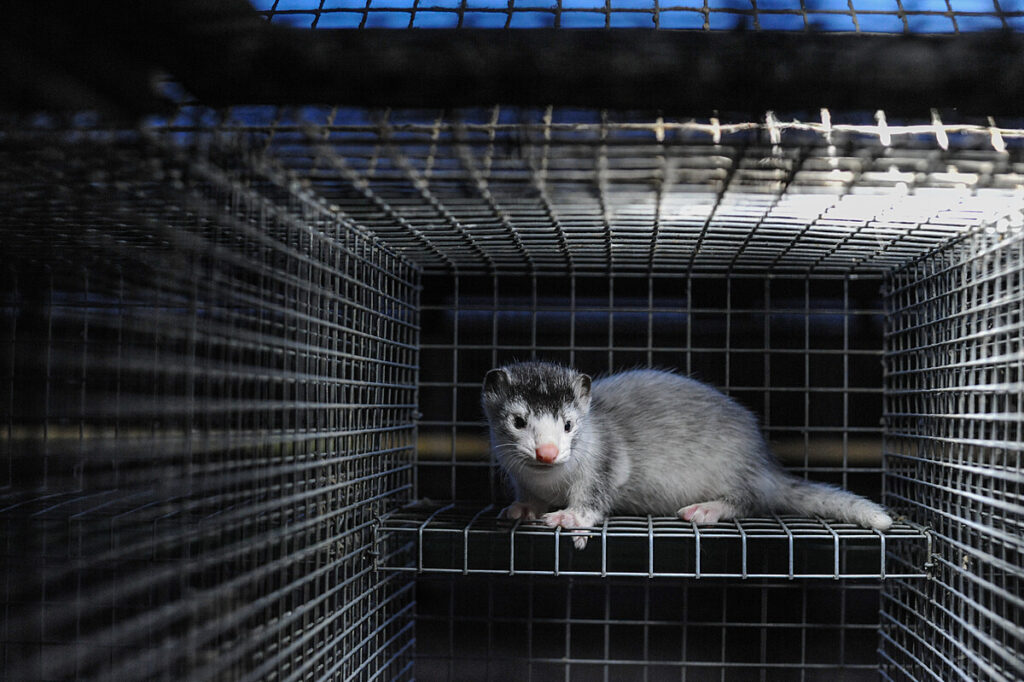
I advocacy approach seeks to interpret the moral rights of animals into practical alter by expanding how the law views animals: from property to personhood. Legal status as a person is something that U.South. courts have given to corporations, ships, and "entities of nature," co-ordinate to the Animal Legal Defense Fund, and it has been conferred on individual great apes outside the United States. Read more than well-nigh the nuances of how advocates are trying to amend the condition and legal protections of animals here.
What Are Animal Rights?
Animal rights class function of a style of thinking about nonhuman animals as off-limits for human exploitation. People that espouse this fashion of thinking effort to direct their own and others' behaviors away from eating, dressing, conducting scientific experiments, and beingness entertained in ways that involve impairment to nonhuman animals.
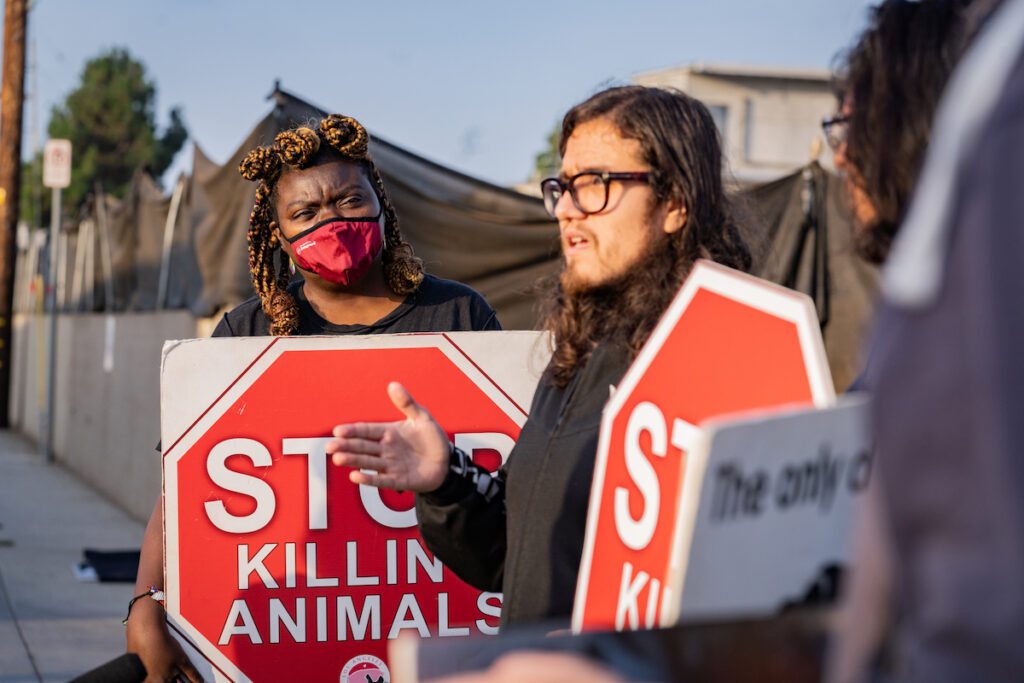
Animal rights is too a wide term describing animal advocacy, and the social movement focused on improving the lives of nonhuman animals. Yet the term "animal rights activist" can exist alienating, which may be why groups adopt to apply the terms "animal protection" or "creature advocates."
When Did the Creature Rights Movement Begin in the U.South.?
The modern animal rights move in the United States saw a major milestone in the 1970s with the publication of Peter Singer's "Animal Liberation," in which he argued that it was ethically important that nonhuman animals feel pain, and that this fact demanded far more equal handling of nonhuman animals and humans. He also popularized the term "speciesism" to describe what happens when nonhuman animals are not given the same consideration every bit humans. Other thinkers, writers, and activist groups have too notably furthered and developed the cloth of the animal rights movement, both earlier and since Vocaliser's volume, including Tom Regan and PETA.

Singer's text itself reportedly sits on the shoulders of at least i British author who lived almost a century prior. And for many centuries European travelers to Bharat have learned about, and been attracted to, the concept of ahimsa and care for animals. Ahimsa, documented as early on as the eighth century B.C. in Indian religious texts—Hindu, Jain, and Buddhist—affirms nonviolence and the consolation of the suffering of all beings.
From the perspectives of scholars such equally Cree writer Billy Ray Belcourt, and vegan theorists such as Aph and Syl Ko, the modern split up between animals and humans works in tandem with the imposition of white supremacy: on Indigenous people whose country was stolen by settler-colonists and who were targets of genocide, and on Black and Brown people who were and often continue to be treated every bit less than human being.

Thus the brute protection movement in the United States is limited by the legacies and habits of idea of settler colonialism and other oppressions, and the history of the move is whitewashed—something that people are now trying to undo. Belcourt, for example, argued in a 2020 article that people concerned with living ethically must challenge the white supremacy underpinning many efforts to expand the rights of nonhuman animals, and instead look to Indigenous traditions that run into "animals equally kin who co-produce a manner of life that engenders care rather than and contra to suffering."
What's the Difference Between Brute Welfare and Creature Rights?
The terms "creature welfare" and "animal rights" are like, merely animate being rights is a broader idea than beast welfare. Animal welfare refers to the responsibility of humans to care for nonhuman animals well and direct intendance for their health, merely without challenging the overall circumstances that animals find themselves in or the means they are used in lodge.
For example, an brute welfare abet may be vigilant about how animals such equally bears and apes are treated in the movie industry when they are working on a gear up. An animal rights proponent may instead call for an stop to the use of animals in films altogether.
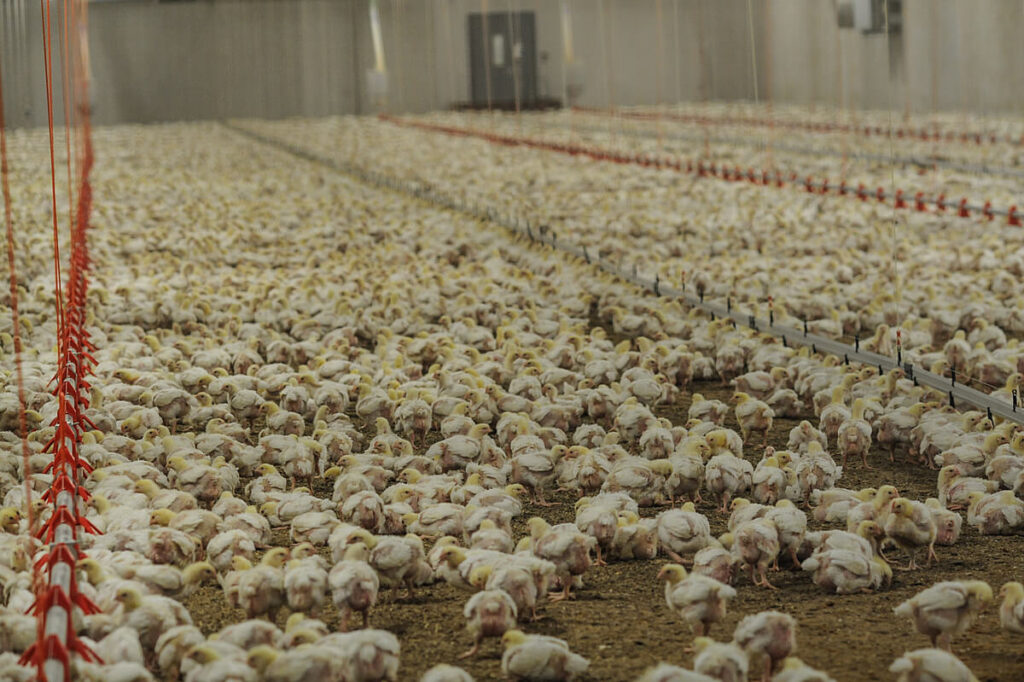
Some other example of animal welfare is when people campaign for better treatment of immature chickens before they are slaughtered. Though groups that campaign for animate being welfare may besides back up goals that are compatible with creature rights, for example when promoting the consumption of plant-based foods.
What Are Some Examples of Fauna Rights?
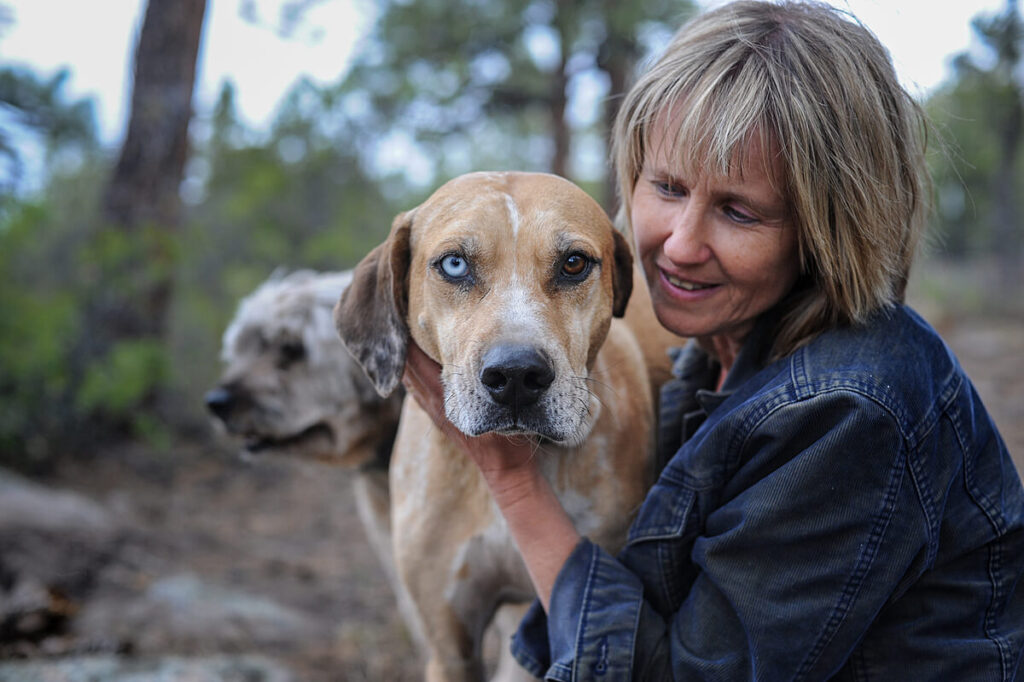
Animal rights supporters tend to be concerned that people use animals as a means to an end, typically without the animals' assent to participate in an activity. In addition to the examples below, common areas of concern for animal rights include clothing, makeup, scientific experimentation, sports, and wildlife.
Animate being Agriculture
Hogs are non but the source material for a good ho-hum roast, crispy bacon, and pork belly. The pork industry also disassembles pigs for their parts to exist used as ingredients in manufacturing, pharmaceuticals, and other scientific endeavors. People who support animal rights tend to oppose all farming of livestock and fish. The fictional moving-picture show "Okja" is often cited as an animal rights story dealing with these problems—one that is sympathetic to animals sent to slaughter.
Amusement
Circuses, zoos, and aquariums have been the subject field of animal rights campaigns and pop documentaries, such as "Blackfish", that have resulted in changes to how the amusement manufacture markets animate being-based entertainment.
Companionship and Working Animals
People concerned with animal rights might be more than concerned with the potential for conscripting an animal into an unhealthy situation that exploits their labor than they would be about the benefits to humans of emotional support animals or country-mine-sniffing rats.
Animal Rights Arguments: Pros and Cons
The arguments of critics and supporters of animal protection tin seem as diverse as the number of people who limited an opinion. Below are some common reasons why people may experience pulled toward or away from beast rights causes.
Arguments in Favor of Animal Rights
In "Aphro-ism", Syl and Aph Ko promote a view of animal rights within Black Veganism that sees brute rights as essential to ending racism. They write sensitively near the topic in a way that acknowledges how white supremacy has animalized Black people. They also depict a line from the oppression of nonhuman animals to white supremacy and convincingly debate that beingness antiracist is essential to animal liberation.
People centrolineal with animal rights might also include Coast Salish activists in the Block Corporate Salmon campaign, who identify themselves every bit Salmon People and oppose the introduction of genetically modified fish to the local wild fauna environment.
Arguments Against Fauna Rights
People who oppose fauna rights might see animals every bit property, and inferior to humans. They might contend that eating meat is a natural feature of the food chain, or that nonhuman animals exist for the benefit of humans.
Sometimes, deciding to disregard creature rights is a matter of practicality. For example, using life-saving products that were created with scientific inquiry that relied on experimentation on nonhuman animals, as is the case with vaccines and pharmaceutical medicines.
Equally beast advocate, Christopher Soul Eubanks wrote in March 2021, "To Black people and non-vegans of all races, the animal rights movement tin announced as an affluent far-left group who ignore the systemic oppression they accept benefited from while using that abundance to advocate for nonhumans." Indeed, roughly 9 out of x people working for farmed animal protection organizations are white. In a more racially equitable world, that number would be closer to 6 in the Usa.
Colonialist harms brought about past animal rights and vegan activism can be investigated: information technology's something people of the global majority and others have begun.
Why Are Brute Rights Of import?
"Beingness labeled less-than-human" is a condition that most people experience, i that Blackness and other oppressed peoples live daily, according to Aph Ko in a chapter of "Aphro-Ism." Ko besides writes in a later chapter that "'[a]nimal' is a category that we shove certain bodies into when nosotros want to justify violence against them, which is why animal liberation should concern all who are minoritized, because at any moment you can become an 'fauna' and be considered disposable."
For Ko, beingness a disquisitional thinker is more important than believing pop, yet imitation, narratives nearly oneself and nonhuman animals. This desire to re-evaluate what 1 thinks is a launching point for Afrofuturist possibilities, or Blackness-centered creativity, a philosophical wellspring for Black veganism. Y'all tin read more about Blackness veganism here, hither, and hither.

Animal rights, then, is an opportunity to constantly ask tough questions. And asking questions creates spaces within which vulnerable communities tin flourish. For antiracist humane educator Dana McPhall, the following questions guide her work:
"And so what would it look like to imagine a world where I'm not defined past the racial and gender constructs imposed upon me? Where people racialized every bit white are no longer invested in whiteness? Where the lives of nonhuman animals are no longer confining within the social construct "animal?" Where huge swaths of our planet are not considered dispensable, forth with the people and wildlife who inhabit them?"
What Are the Consequences of Beast Rights?
Results of creature rights activism include the increasing popularity of vegan food products, a ban on selling fur in California, and state bans on using most animals in circuses. Keeping up with Sentient Media is 1 style to encounter these types of stories equally they proliferate.
Ending Suffering Wherever Information technology Persists
Nonhuman animals' rights are non then much a question of legality or illegality, specially as laws tend to treat them as property. They are rather a way of thinking about what is morally correct in a given cultural context. Avoiding the suffering of animals and respecting their right to exist are basic tenets of creature protection. As a way of thinking and being in community with others, creature rights can be an invitation for learning and imagining. Animal advocates of all races can dismantle white supremacy and undo "isms" by re-centering the experiences of Black, Brown, Indigenous, Asian, and other previously "less-than-human" people.
Source: https://sentientmedia.org/animal-rights/
Posted by: carterwasat1981.blogspot.com
0 Response to "Do Animals Deserve The Same Rights As Humans"
Post a Comment